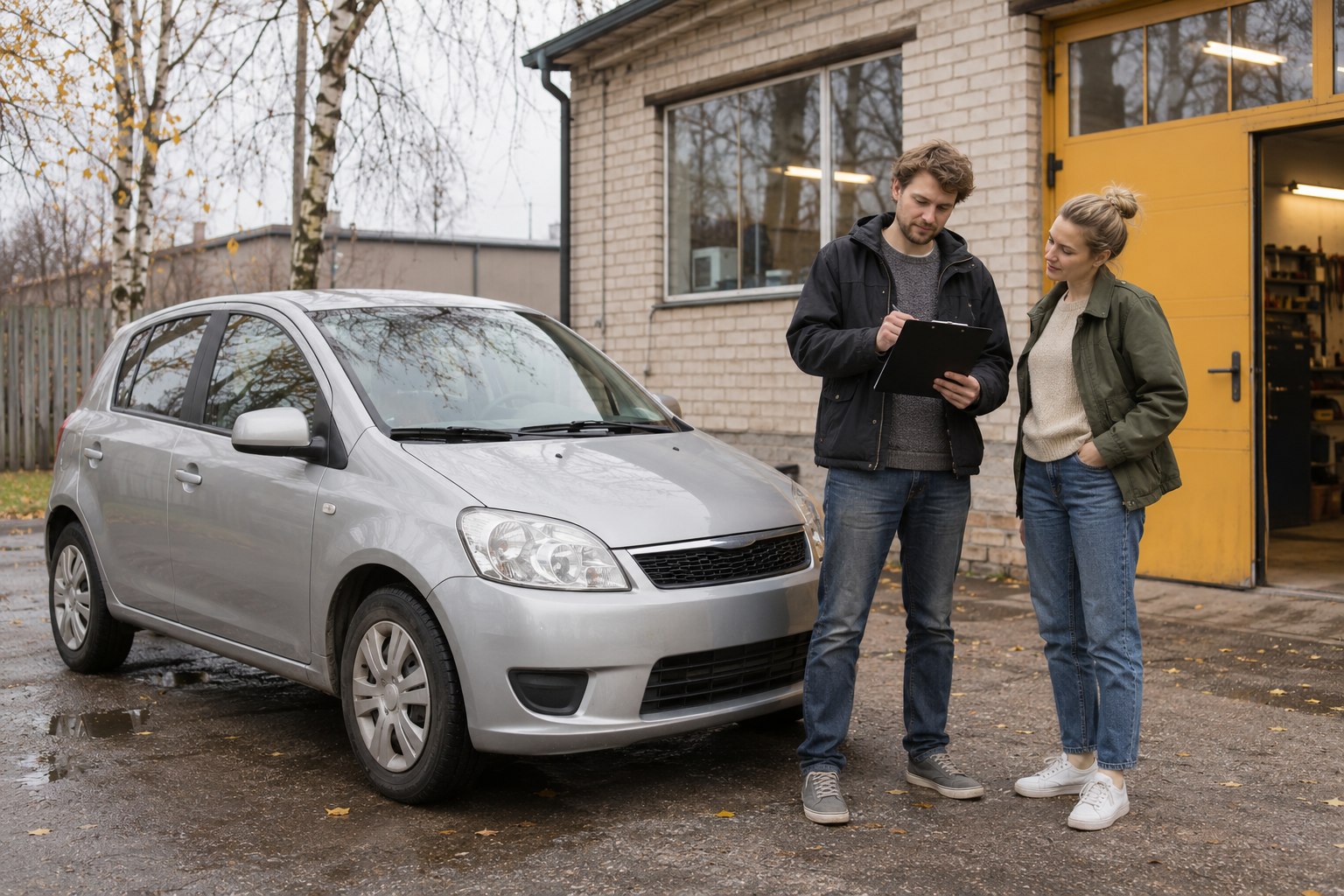
Agree the practical arrangement
Confirm the location, time, vehicle identity and who will be present. Ask whether documents and the relevant keys will be available and whether the seller agrees to an independent assessment. Give yourself enough time to understand the answers. If the arrangement changes substantially, reconsider whether the visit can still answer the questions you intended to resolve.
Record what you can actually observe
Use plain notes: a feature was demonstrated, a document was shown, or a question was left unanswered. A photograph or an unfamiliar noise does not let an unqualified viewer determine a cause. Ask an appropriate professional about uncertainty instead of turning a visual impression into a technical conclusion. Keep any images you take respectful of people’s privacy.
Plan a professional assessment
Clarify the assessor’s independence, scope, price and written findings before booking. Ask how limitations will be recorded and who can explain a result afterwards. A quick conversation beside a vehicle is different from an agreed inspection. This guide does not provide repair instructions, a remote diagnosis or a certificate that the vehicle is roadworthy.
Close the open questions
After the visit, update the shortlist with what changed. Keep unresolved questions visible and ask for clarification in writing where useful. Distinguish an estimated cost from a quotation and a proposed repair from completed work. The next step can be further assessment or declining the offer; there is no requirement to make a decision during the viewing itself.
Original editorial notes · 20 November 2026. Sources and scope. This guide does not assess a vehicle or complete an official action.